Emotional Dysregulation: What It Feels Like & How to Find Calm
If you often feel overwhelmed by big, intense emotions, you're not alone. This is a common experience after trauma, known as emotional dysregulation. Let's explore what it is and how we can gently find our way back to a sense of calm.
Part of our guide to 50 grounding techniques for anxiety, PTSD and CPTSD.
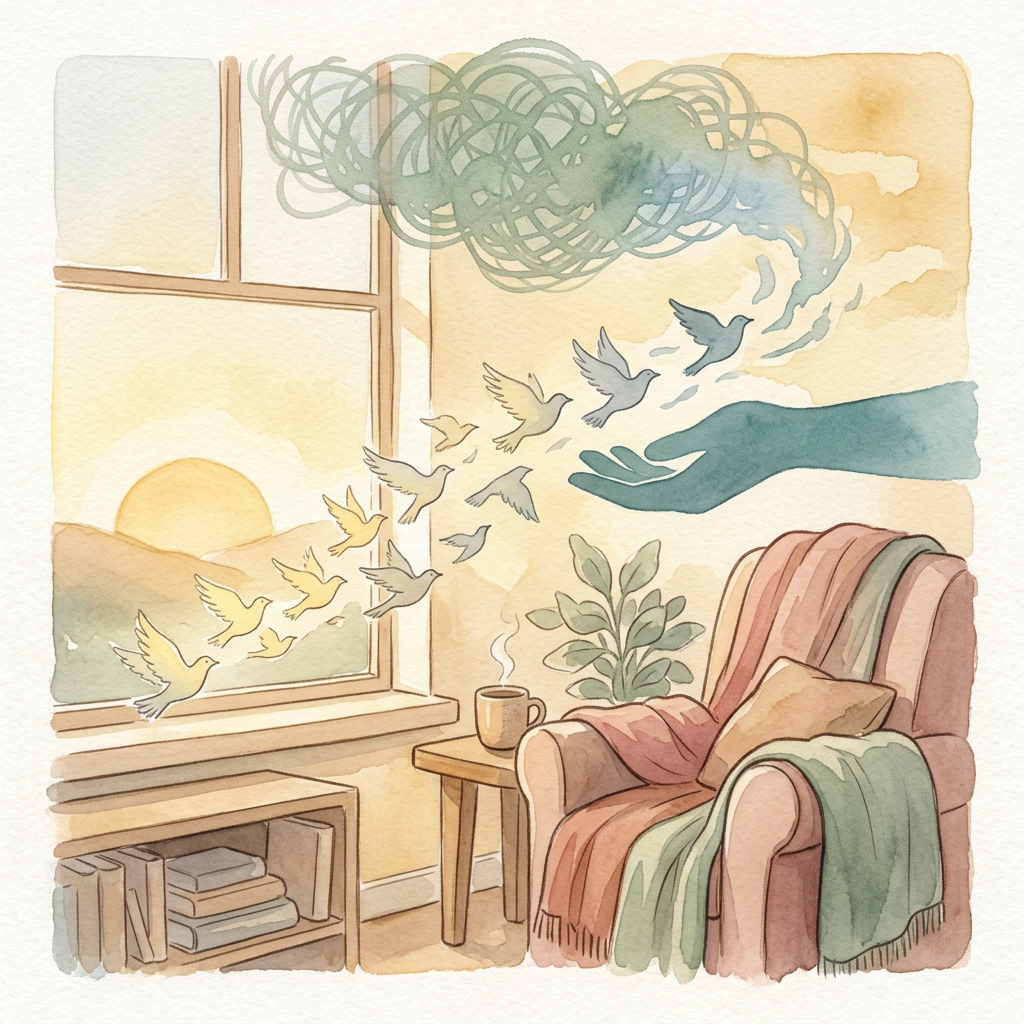
Do you ever feel like your emotions are a runaway train? One minute you might feel okay, and the next you’re swept up in a wave of anger, panic, or despair that feels completely overwhelming and out of your control. If this sounds familiar, you may be experiencing emotional dysregulation. At Recovery Trauma™, we understand this isn't a personal failing; it’s often a very normal and understandable response to overwhelming experiences, especially trauma.
So, What Is Emotional Dysregulation?
In simple terms, emotional dysregulation is when emotions feel too big for the container. It's the difficulty some of us have in managing our emotional responses. After trauma, our nervous system can become wired for survival, constantly on high alert. This can shrink what experts call the 'window of tolerance'—that comfortable zone where we can handle life’s ups and downs without feeling completely overwhelmed (hyperaroused) or shutting down entirely (hypoaroused). When we’re pushed outside this window, it can feel like our emotions are in the driving seat, and we're just along for the ride. It's your body's way of trying to make sense of, and survive in, a world that has previously felt unsafe.
What It Can Feel Like Day-to-Day
Recognising emotional dysregulation in ourselves is the first step toward finding a bit more stability. It can show up in many different ways, and your experience is unique to you. For many survivors, it might look or feel like:
- Intense mood swings that seem to come from nowhere.
- Feeling either completely numb and disconnected or flooded with intense feeling.
- Reacting to small stressors with a level of emotion that feels disproportionate or 'too much'.
- A constant, humming background of anxiety or a sense of dread.
- Finding it incredibly difficult to self-soothe or calm down once you're upset.
- An urge to use unhelpful coping behaviours to numb out the intense feelings.
Seeing these experiences written down can be validating. You’re not 'too sensitive' or 'dramatic'; your system is responding in a way it learned was necessary to protect you.
Why Trauma Can Affect Our Emotional Wellbeing
When we go through something traumatic, the parts of our brain responsible for survival (like the amygdala) go into overdrive. They get stuck in the 'on' position, constantly scanning for threats. This means the nervous system is primed to react with fight, flight, or freeze responses, even when there's no immediate danger. This constant state of high alert makes it incredibly hard for the more logical, calming parts of our brain to do their job. So, a minor frustration, like a traffic jam, can trigger a survival-level response because your system is already so activated. It's not a choice; it's physiology. It's your body remembering danger even when your conscious mind knows you are safe.
Gentle Ways to Begin Steadying Your System
Learning how to calm emotional dysregulation is a gradual process of teaching your nervous system that it’s safe to stand down. It’s about building a sense of safety within your own body, moment by moment. These are not quick fixes, but gentle invitations to experiment with what feels right for you. Remember that this is not a replacement for therapy, but can be a supportive part of your recovery journey.
One of the most powerful things we can do is 'grounding'. This means bringing your attention back to the present moment and into your body, signalling to your nervous system that the threat is not happening right now. Temperature can also be a powerful tool. Splashing your face with cold water or holding an ice cube can activate a physiological response that helps to slow your heart rate and bring you out of an intense emotional state.
A gentle safety note: If you are feeling in crisis or that your emotions are unmanageable and you might hurt yourself, please reach out for immediate support. You can call 111 (and select the mental health option), contact Samaritans on 119, or text 'SHOUT' to 85258. You don't have to go through this alone.
What to try today
Next time you make a cup of tea or coffee, take a moment to really notice it. Feel the warmth of the mug in your hands. Pay attention to the steam, the smell, the taste. This small act of mindfulness anchors you in the present, offering your nervous system a tiny moment of calm and safety. That's a start.
Recovery is not about banishing big emotions forever. They are a natural and necessary part of being human. Instead, it is about slowly and compassionately widening our capacity to experience them without being completely swept away. It's about learning to ride the waves, knowing they will pass, and trusting that we can find our way back to shore. Be gentle with yourself; this takes time and practice. You are learning a new way of being in the world, and every small step is a victory.
Related reading: what emotional regulation is and how to build it.
Practices that go with this article
These guided practices are part of Recovery Trauma™ membership. They were chosen to match what you have just been reading.
Ready to put what you've learned into practice?
Recovery Trauma™ gives you access to guided exercises, grounding and nervous-system practices, journals, healing journeys, assessments and other recovery resources — all in one place.
Join Recovery Trauma™Already a member? Sign in to go straight there.
Sources & further reading
- Generalised anxiety disorder in adults — NHS
- Anxiety Disorders — National Institute of Mental Health (NIMH)
- Breathing exercises for stress — NHS
These sources are for general education. Recovery Trauma™ does not diagnose or treat — please speak to a qualified professional about your own situation.
Cite this article: Recovery Trauma™ (2026). “Emotional Dysregulation: What It Feels Like & How to Find Calm.” Recovery Trauma™. https://recoverytrauma.com/blog/emotional-dysregulation-how-to-find-calm
Keep going with Recovery Trauma™
Wellbeing is not something you do alone. Here's what's next.
Keep reading