How Long Does Trauma Recovery Actually Take? A Realistic Guide
If you're asking 'how long does trauma recovery take?', you're not alone. It's a question many of us carry. This post explores a realistic timeline, honouring that every survivor's journey is unique.
Part of our guide to a complete guide to recovering after trauma.
If you are asking ‘how long does trauma recovery take?’, we want you to know that this is one of the most common and human questions a survivor can ask. You might feel an urgent need for the pain to stop, or perhaps you’re tired of feeling stuck. At Recovery Trauma™, we understand this deeply. The truth is, there’s no simple answer or universal calendar for coming back to yourself after trauma, and that’s okay. This journey is yours, and the timeline is, too.
The Uncomfortable Truth: There Is No Set Timeline
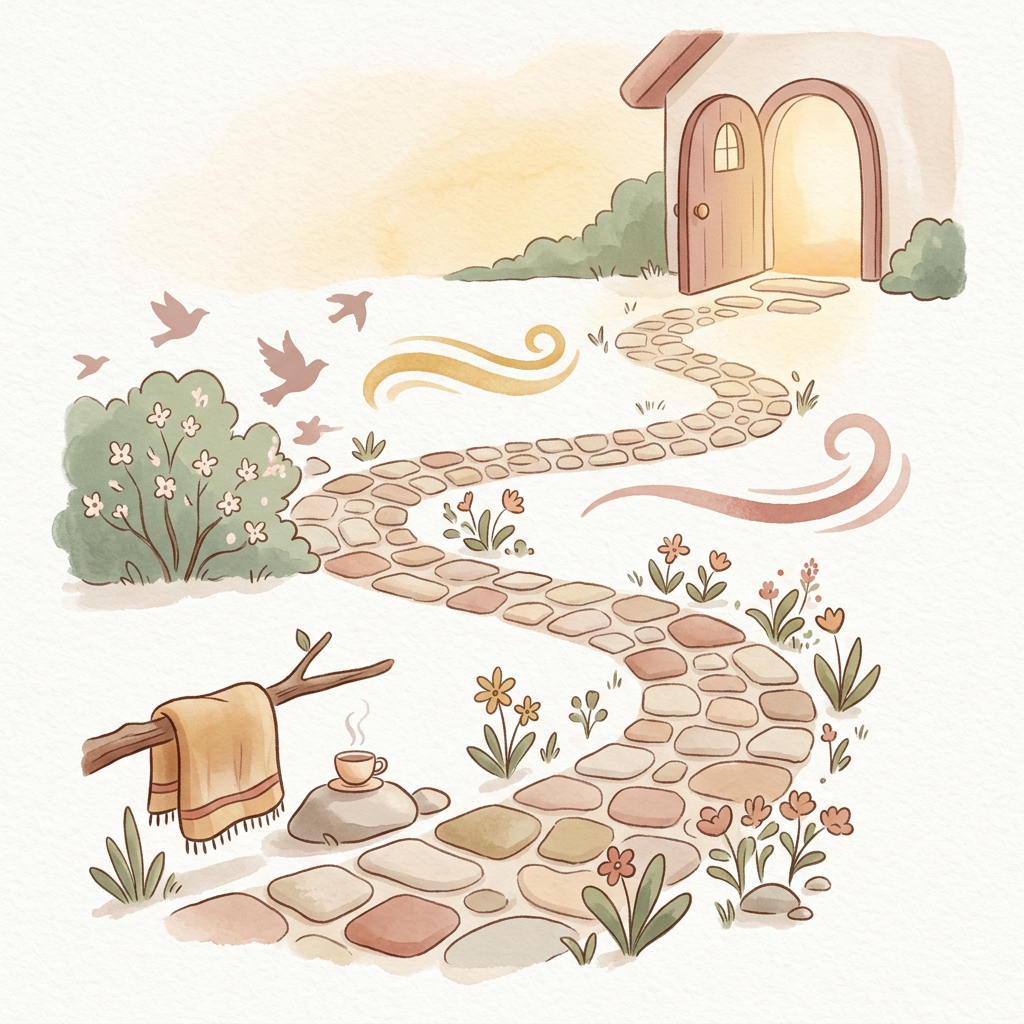
In a world that loves quick fixes and predictable outcomes, the uncertainty of trauma recovery can be deeply frustrating. But your journey is not a project to be managed or a race to be won. It’s an organic, unfolding process. Think of it less like a straight motorway and more like a rambling country path – it has twists, turns, periods of rest, and moments where you might even retrace your steps. This is not a sign of failure; it is the very nature of recovery. It’s important to remember that survivor-led resources are here to support you, but they are not a replacement for professional therapy.
Exploring the Stages of Trauma Wellbeing
While there’s no fixed timeline, many people find it helpful to understand the general phases of recovery, first outlined by trauma expert Judith Herman. This isn't a checklist to complete, but a gentle map to help you locate where you are. Most people move between these stages, often revisiting earlier ones as needed.
Stage 1: Establishing Safety and Stabilisation The first priority is always safety. This means finding a sense of safety in your body, your environment, and your relationships. It's about the present moment, not the past. This phase focuses on learning to self-regulate your nervous system, building routines that feel supportive, and resourcing yourself with grounding techniques that help you feel more solid in the here and now. For many, this is the longest and most important stage.
Stage 2: Remembrance and Mourning Once a foundation of safety is established, some people may, often with the support of a trauma-informed therapist, begin to process the memories of what happened. The goal isn't to re-live the trauma, but to make sense of the story and integrate it into your life. It is also a space to grieve the losses associated with the trauma – the loss of safety, of trust, or of the person you were before.
A gentle note: Reading about these stages can sometimes feel overwhelming. If you find yourself in distress or crisis, please prioritise your immediate safety by contacting a GP, crisis line, or emergency services. Your wellbeing comes first.
Stage 3: Reconnection and Integration This final stage is about creating a life beyond the trauma. It involves reconnecting with yourself and with others, finding meaning, and building a future where the trauma is a part of your story, but not the whole story. It’s about engaging with the world again, on your own terms, with a renewed sense of purpose and hope.
What Influences Your Personal Pace?
Every survivor's journey is shaped by a unique combination of factors. Understanding these can help foster self-compassion and release you from unfair comparisons. Your pace of trauma recovery might be influenced by:
- The Nature of the Trauma: Recovering from a single-incident trauma can look very different from recovering from complex or developmental trauma that occurred over many years.
- Your Support System: The presence of safe, supportive people who believe you and offer compassion can make a significant difference.
- Access to Resources: Factors like stable housing, financial security, and access to appropriate, trauma-informed therapy all play a crucial role.
- Your Unique Biology: Every person’s nervous system, genetics, and overall health will impact how they process and recover from overwhelming experiences.
What to try today: Try swapping the question "How long will this take?" with "What is one small, kind thing I can do for my wellbeing in this moment?". It could be making a cup of tea, noticing the feeling of your feet on the floor, or stretching for 30 seconds. This simple shift brings the focus from a distant, unknown finish line to the compassionate care you can offer yourself right now.
Your timeline for recovery is your own. It cannot be rushed, and it doesn't need to look like anyone else's. Letting go of the pressure to be 'better' by a certain date is a radical act of kindness to yourself. Every moment you choose to be gentle with your process, every time you offer yourself a moment of quiet, you are actively participating in your own recovery. We see you, and we honour the pace of your unique and courageous journey.
Practices that go with this article
These guided practices are part of Recovery Trauma™ membership. They were chosen to match what you have just been reading.
Ready to put what you've learned into practice?
Recovery Trauma™ gives you access to guided exercises, grounding and nervous-system practices, journals, healing journeys, assessments and other recovery resources — all in one place.
Join Recovery Trauma™Already a member? Sign in to go straight there.
Sources & further reading
- Post-traumatic stress disorder (PTSD) — overview — NHS
- Post-traumatic stress disorder — fact sheet — World Health Organization
- Post-traumatic stress disorder (guideline NG116) — NICE
- Working definition of trauma-informed practice — UK Government (OHID)
These sources are for general education. Recovery Trauma™ does not diagnose or treat — please speak to a qualified professional about your own situation.
Cite this article: Recovery Trauma™ (2026). “How Long Does Trauma Recovery Actually Take? A Realistic Guide.” Recovery Trauma™. https://recoverytrauma.com/blog/how-long-does-trauma-recovery-take
Keep going with Recovery Trauma™
Wellbeing is not something you do alone. Here's what's next.
Keep reading
Related articles
Trauma Recovery
How to Overcome Trauma: A Step-by-Step Guide for Adults
Overcoming trauma is not about forgetting what happened. It is about helping your nervous system learn that the danger is over. Here is what that takes, step by step, at your own pace.

Trauma Recovery
What Is Emotional Trauma? When the Wound Is Not Physical
Emotional trauma comes from experiences that overwhelmed your sense of safety, worth or belonging — with no visible injury to point at. Here is what it is and how it shows up.
Trauma Recovery
What Is Trauma? A Plain Explanation of What It Is and What It Does
Trauma is not the event itself — it is what the event left behind in your nervous system. A clear, survivor-led explanation, without diagnosis or jargon.