How to Regulate Your Nervous System: A Gentle Guide
Living with a dysregulated nervous system can feel overwhelming and exhausting. This guide offers gentle, practical ways to understand your body's responses and support your journey towards greater calm and stability.
Part of our guide to 50 grounding techniques for anxiety, PTSD and CPTSD.
If you’re reading this, you might be familiar with that feeling of being on high alert, or perhaps shut down and numb. It can feel as though your own body is a strange and unpredictable place. We want you to know you aren’t alone, and there are gentle ways to reconnect. This isn't about 'fixing' yourself, but about learning how to regulate your nervous system with compassion.
A gentle safety note: Reading about trauma and the nervous system can sometimes bring up difficult feelings. Please feel free to pause, take a break, or step away if you need to. Your wellbeing comes first. If you are in crisis, please connect with a trusted support person or a crisis service.
What is a Dysregulated Nervous System?
Think of your nervous system as your body's incredibly clever intelligence network. It's designed to keep you safe by responding to the world around you. When it senses danger, it fires up (fight or flight) to give you the energy to cope. When the threat feels too overwhelming, it might power down (freeze or fold) to help you survive. This is a brilliant survival mechanism.
For many of us who have experienced trauma, this system can become dysregulated. It might stay stuck in 'on' mode, leaving us feeling anxious, restless, or irritable. Or it might get stuck in 'off' mode, leading to feelings of numbness, disconnection, and exhaustion. Sometimes, we can swing between the two. A dysregulated nervous system isn't a personal failing; it's a physiological response to overwhelming experiences. At Recovery Trauma™, we see it as a testament to what you have survived.
Why ‘Just Calm Down’ Doesn’t Work
Have you ever been told to 'just calm down' when you feel anything but? It's often well-intentioned advice, but it rarely helps. That's because a dysregulated state isn't a conscious choice or a thought pattern you can simply talk yourself out of. It’s a bodily response.
Trying to 'think' your way to calm when your body is screaming 'danger' can be deeply invalidating. It can add a layer of shame, making us feel like we're failing at relaxation. The journey towards nervous system regulation isn't about forcing calm; it's about creating an internal sense of safety that allows your body to find its own way back to balance, in its own time.
Gentle Ways to Support Your Nervous System's Wellbeing
Because dysregulation is a body-level experience, the most effective ways to support it are often through the body itself. This is sometimes called a 'bottom-up' approach. Instead of starting with your thoughts, you start with physical sensations. These don't need to be big, complicated exercises. The goal is simply to send your body small, consistent cues of safety.
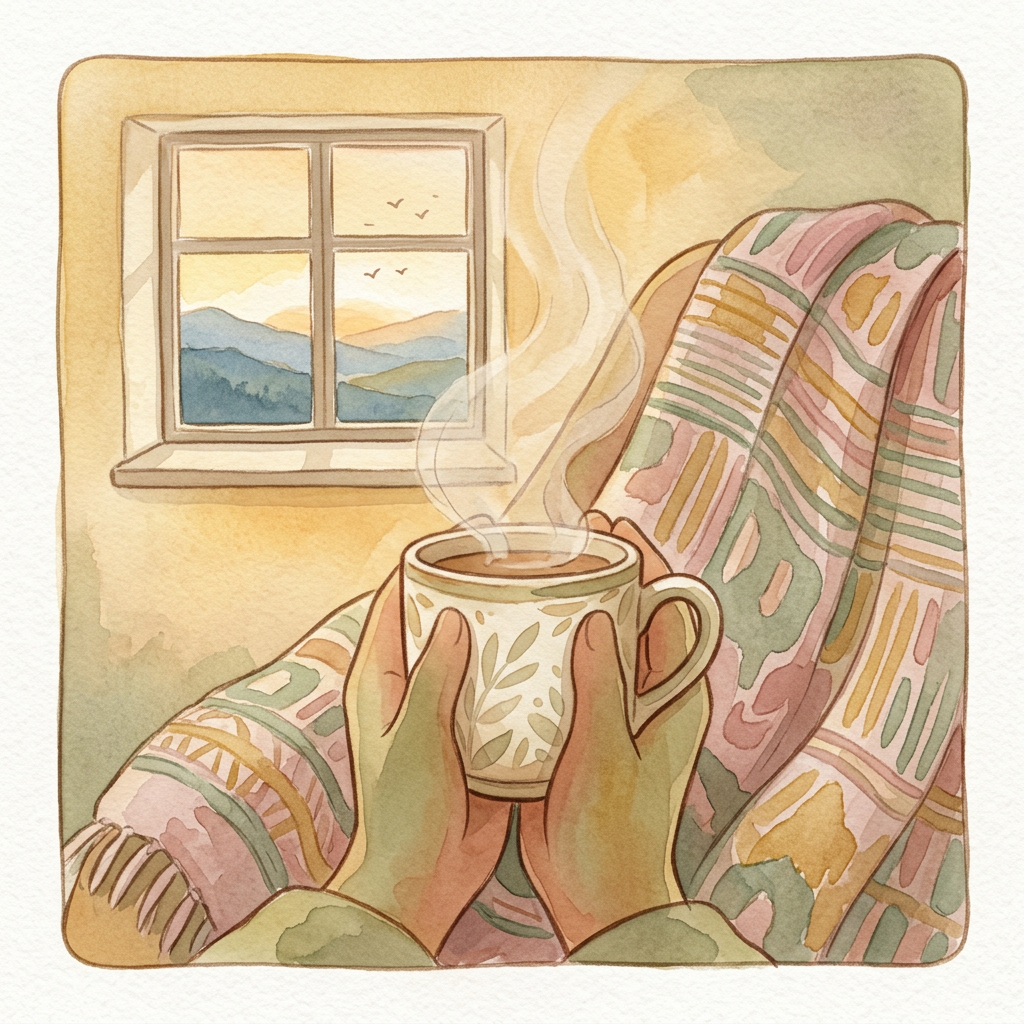
This could involve noticing your breath without trying to change it, feeling your feet on the floor, or using temperature. A warm cup of tea held in your hands, or splashing cool water on your face, can be powerful communicators of 'I am here, right now, and in this moment, I am okay'. It’s about gently inviting your body into the present moment.
The Power of ‘Little and Often’ in Recovery
There can be a lot of pressure to make grand gestures towards our wellbeing, but when it comes to nervous system regulation, small and consistent is often more supportive. The aim is to build a foundation of safety, moment by moment. It's about collecting 'micro-moments' of regulation that, over time, can help widen your window of tolerance.
Here are a few small things you might practise:
- Gently stretching your arms over your head, and then letting them relax.
- Looking around the room and naming three things you can see that have the colour blue.
- Placing a hand on your chest and just noticing the feeling of its weight and warmth.
- Humming or sighing, allowing the vibration to move through your body.
These tiny acts can feel like drops in the ocean, but they are incredibly meaningful. They are small ways of telling your body, 'I am listening'.
What to try today: A Moment of Orienting
Right now, wherever you are, allow your head and eyes to gently scan the room. Don's force it. Just let your gaze drift. Look from side to side, up and down. Notice where your eyes naturally want to rest. Is there a particular object, colour, or patch of light that feels a little bit better, or more neutral, to look at? Let your eyes stay there for a few breaths. You don't have to feel anything special. You are simply signalling to your body that you are in a safe enough place to look around.
This journey of coming back to your body is deeply personal and unfolds at its own pace. There is no right way or wrong way to do it. The most important guide is your own internal sense of 'what feels right for me, right now?'. We invite you to be curious and deeply compassionate with yourself as you explore what helps your system feel even a little bit steadier. You've gotten yourself this far, and that is remarkable.
Keep going with Recovery Trauma™
Wellbeing is not something you do alone. Here's what's next.
Keep reading
Related articles

Nervous System
Hypervigilance: Why You Always Feel on Edge
The exhausting alertness that never switches off. Hypervigilance explained — what it is, why your body won't stand down, and how to teach your nervous system it's safe to rest.

Nervous System
How to Regulate Your Nervous System After Trauma
Trauma lives in the nervous system, not the story. Learn how to work with your body — through breath, movement, and co-regulation — to come back to safety.

Nervous System
How Trauma Changes the Brain
A plain-language explanation of what trauma does to the amygdala, hippocampus, prefrontal cortex, and the nervous system — and why symptoms make biological sense.