Trauma-Informed Self-Care: A Realistic Daily Practice
Finding a self-care routine after trauma isn't about bubble baths or grand gestures. It's about small, gentle moments of safety and connection that help you feel more present in your own body.
Part of our guide to 50 grounding techniques for anxiety, PTSD and CPTSD.
If you're a trauma survivor, the idea of 'self-care' might feel like just another thing you're failing at. Mainstream self-care, with its focus on luxury spa days and positive thinking, often doesn't resonate when your nervous system is on high alert. Here at Recovery Trauma™, we understand that. This isn't about forcing yourself to feel good; it's about gently creating moments of safety and stability in your own body, on your own terms.
Why 'Regular' Self-Care Often Misses the Mark
For many people, a hot bath or a morning run is a way to de-stress. But for a trauma survivor, being alone with your thoughts in a quiet room can be terrifying. An intense workout might feel overwhelming and activating, not restorative. Trauma can leave us feeling disconnected from our bodies, and many common self-care activities can inadvertently increase feelings of anxiety or dissociation. The pressure to 'practise self-care' can become another source of shame when it doesn’t work the way it's 'supposed to'. It's not you; it's the approach that's wrong.
Coming Back to a Definition of Wellbeing
So, what is trauma-informed self-care? It’s an approach rooted in understanding the impact of trauma on the nervous system. It prioritises feeling safe over feeling happy. It’s about choice, agency, and listening to what your body is truly telling you in this exact moment, without judgement. This gentle self-care for trauma survivors isn't about adding more to your to-do list. It’s about recognising that your wellbeing rests on a foundation of safety, connection, and empowerment. It’s what you do before the bubble bath that matters.
Small Steps for Steadying Yourself
Recovery from trauma is not a linear process. It’s about the small, consistent actions that signal safety to your body and mind over time. The goal isn't to eliminate all discomfort, but to slowly expand your capacity to be with it. Instead of aiming for big, Instagram-worthy gestures, consider micro-practices that you can weave into your day.
Here are a few ideas to show what we mean:
- Notice your feet: Wherever you are, press your feet gently into the floor. Notice the sensation of the ground beneath you. It’s a simple way to feel more anchored.
- Name a colour: Look around the room and silently name one thing you see and its colour. For example, 'blue mug'. This brings your attention to the present moment.
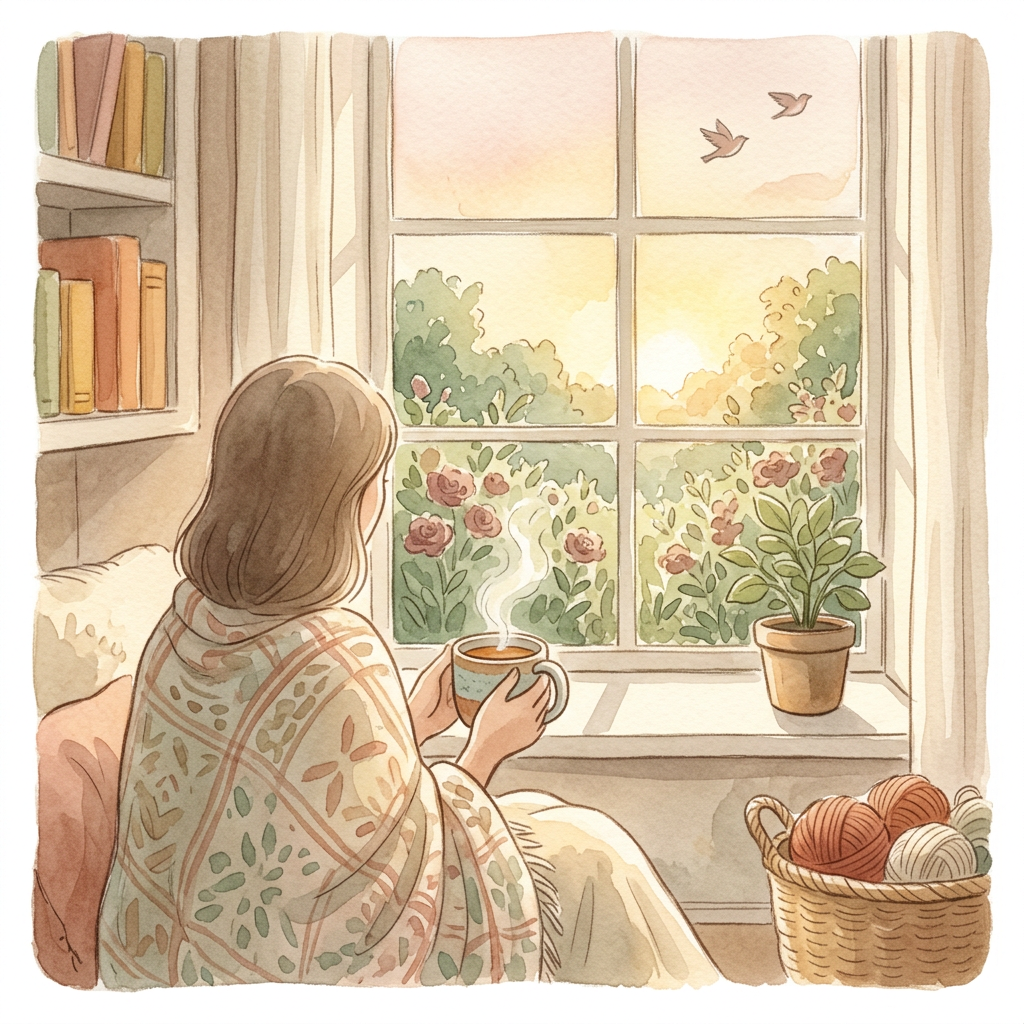
- Use temperature: Hold a cool glass of water or a warm cup of tea. Focus on the sensation of the temperature in your hands for just a few seconds.
- Engage your senses: Find one thing you can smell (a piece of fruit, soap, the air outside), or one thing you can hear (a bird, distant traffic). This is a simple grounding technique.
Building a Practice, Not a Performance
It's crucial to release the pressure for self-care to be a performance. There will be days when all you can manage is to get out of bed, and that is more than enough. This is a practice, not a pass/fail test. On some days, a five-minute walk might feel possible and nourishing. On others, just noticing the texture of your jumper is what feels right. The key is compassionate curiosity. 'What might feel even 1% better right now?' is a much more helpful question than 'What should I be doing for my self-care?'
Navigating Difficult Days
Some days will be incredibly hard. On these days, the idea of self-care can feel like an impossible demand. The most compassionate, trauma-informed response is to acknowledge the difficulty and reduce your expectations to almost zero. The goal is simply to get through. This might look like wrapping yourself in a heavy blanket, watching a comfort film, or simply reminding yourself to breathe. It’s about survival and self-kindness, not self-improvement.
A gentle note: If you are in crisis, feeling overwhelmed, or unsafe, please know that support is available. Reaching out to a trusted professional or a crisis support service like the Samaritans (116 123 in the UK) can provide immediate help.
What to try today: Take three slow, gentle breaths. You don't need to change anything about your breath, just notice the feeling of the air moving in and out of your body. That's it. That's a moment of mindful self-care.
Your journey is your own, and it will unfold in its own time. We invite you to be gentle with yourself, to celebrate the smallest moments of connection, and to remember that your worth is not measured by your productivity or your 'progress'. Just being here is enough. Please remember, these are ideas for personal wellbeing and are not a replacement for professional therapy or medical advice.
Practices that go with this article
These guided practices are part of Recovery Trauma™ membership. They were chosen to match what you have just been reading.
Ready to put what you've learned into practice?
Recovery Trauma™ gives you access to guided exercises, grounding and nervous-system practices, journals, healing journeys, assessments and other recovery resources — all in one place.
Join Recovery Trauma™Already a member? Sign in to go straight there.
Sources & further reading
These sources are for general education. Recovery Trauma™ does not diagnose or treat — please speak to a qualified professional about your own situation.
Cite this article: Recovery Trauma™ (2026). “Trauma-Informed Self-Care: A Realistic Daily Practice.” Recovery Trauma™. https://recoverytrauma.com/blog/trauma-informed-self-care-daily-practice
Keep going with Recovery Trauma™
Wellbeing is not something you do alone. Here's what's next.
Keep reading
Related articles
Self-Care
How to Stop People-Pleasing Without Becoming Someone You Are Not
People-pleasing is rarely about being nice. It is usually about staying safe. A practical, paced guide to saying less, disappointing someone survivably, and finding out that you are still liked.
Self-Care
Trauma Journaling: How to Start a Trauma Recovery Journal Safely
What a trauma recovery journal is for, why writing can help, how to write without overwhelming yourself, and 30 gentle prompts you can use today.

Self-Care
Self-Abandonment: The Habit of Leaving Yourself
Self-abandonment is the quiet habit of overriding your own needs, limits and knowing. How it forms after trauma, how to spot it in real time, and how to return.