What Is a Trauma Bond & How Do I Recognise One?
Understanding a trauma bond can feel confusing and isolating. This is a space to gently explore what a 'trauma bond relationship' means, notice its signs, and discover you're not alone in this experience.
Part of our guide to what a trauma bond is and how to break free.
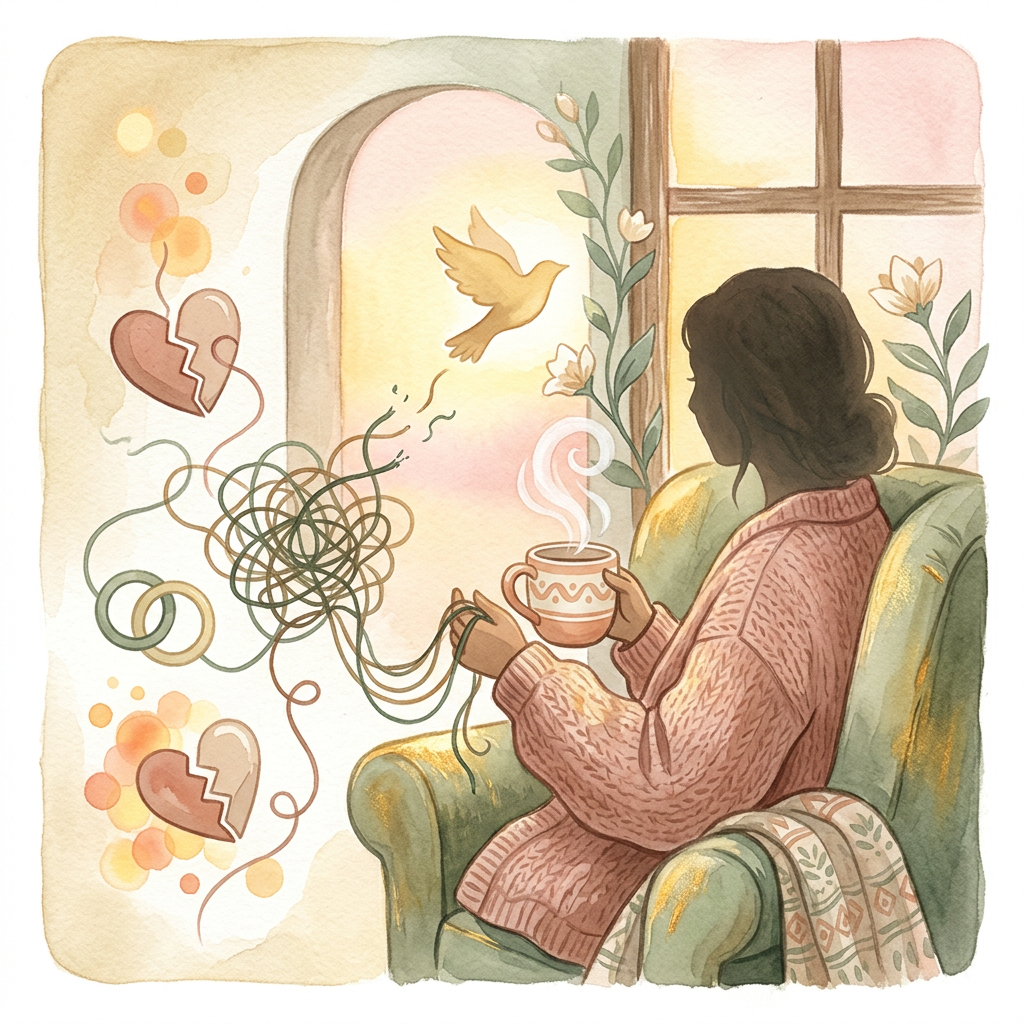
If you've ever felt intensely connected to someone who consistently causes you pain, you might have come across the term 'trauma bond'. It can feel like a confusing and isolating experience, often making you question your own reality. Here at Recovery Trauma™, our survivor-led platform, we want to create a space to gently explore what is a trauma bond, how it forms, and what small steps you can take to come back to yourself. You are not alone in this.
So, What Is a Trauma Bond, Really?
A trauma bond is a powerful emotional attachment that a person in a difficult or abusive situation may form with the person causing them harm. It's not about love or logic; it's a survival mechanism. This bond is forged through an intense, unpredictable cycle of mistreatment followed by moments of kindness or remorse. Think of it as a powerful, intermittent reward system. Our nervous systems are wired for connection, and when we experience intense highs and lows with someone, our body can mistake that intensity for deep, meaningful attachment. This is not a sign of weakness—it's a testament to your human need to connect and survive, even in the most difficult circumstances.
Common Signs of Trauma Bonding
Recognising a trauma bond can be the first step towards understanding your situation. It's a subtle process, and it often happens without us even realising it. You might notice yourself or a friend experiencing things like this in a trauma bond relationship:
- Defending or making excuses for the other person's harmful behaviour.
- Feeling a deep sense of loyalty, even when they have hurt you repeatedly.
- Isolating yourself from friends or family who express concern about the relationship.
- Feeling 'addicted' to the person and the extreme emotional highs and lows.
- Believing that if you just try harder or change something about yourself, the bad times will stop.
- Feeling unable to leave, even when part of you knows the situation is unhealthy or unsafe.
Seeing your own experience in this list might feel overwhelming. Please be gentle with yourself. This understanding isn't about judgement; it's about clarity.
The Cycle: How a Trauma Bond Relationship Develops
Trauma bonding doesn't happen overnight. It is built over time through a repeated cycle of behaviour. This cycle often involves stages of tension building, an abusive incident, a 'honeymoon' phase of reconciliation, and a period of calm. It's in the 'honeymoon' phase—where the person may be incredibly apologetic, kind, and loving—that the bond is strengthened. This positive reinforcement provides a glimmer of hope and convinces us to stay, reinforcing the belief that the 'good' person is their 'true' self. The unpredictability of these cycles is what makes them so powerful and so difficult to break away from.
Gentle Steps Towards Your Wellbeing
Figuring out how to break a trauma bond is not about having a perfect escape plan. It's a slow, non-linear process of returning to yourself. The first step, which you are taking by reading this, is simply acknowledging what is happening without blame or shame. The bond feels powerful because it is, and it's okay if leaving feels impossible right now. The journey of recovery often begins with tiny internal shifts.
A gentle safety note: If you feel you are in immediate danger or a crisis, your safety is the number one priority. Please reach out to a trusted helpline or service in your area. You do not have to manage this alone.
What to try today: Find a quiet moment. Take three slow, steady breaths. Ask yourself, "What is one small thing that feels like me?" It could be listening to a favourite song, remembering a hobby you once loved, or noticing a colour that brings you a moment of peace. Just for a minute, connect with that part of yourself. It's still there.
This Isn't a Journey to Take Alone
Untangling yourself from a trauma bond can feel incredibly lonely, but support is crucial. This might mean reconnecting with a trusted friend you can be honest with, seeking out a survivor-led support group, or finding a trauma-informed therapist. Sharing your reality with someone safe can help ground you and validate your experience. Remember, platforms like this one are here to offer community and understanding, but they are not a replacement for dedicated professional support.
Remember, understanding the dynamics of trauma bonding is a monumental step forward. Whatever your path of recovery looks like from here, please hold space for your own experience and be exceptionally gentle with yourself. You are not to blame for how you have survived. This is your journey, and it unfolds one steady moment at a time.
Keep going with Recovery Trauma™
Wellbeing is not something you do alone. Here's what's next.
Keep reading
Related articles
Relationships
Signs of a Trauma Bond: A Self-Check Before You Decide
Twelve honest questions to help you tell a trauma bond from a difficult relationship — plus what each answer actually means.
Relationships
How to Break a Trauma Bond: A Step-by-Step Recovery Guide
Breaking a trauma bond is not about willpower. It is about interrupting a cycle your nervous system has learned to depend on — here is how, step by step.
Relationships
What Is Emotional Abuse? Signs, Examples and What to Do
Emotional abuse leaves no marks, which is exactly why it is so often missed. Here are the recognised patterns, real examples, and what actually helps.