Living With PTSD: Daily Coping Strategies That Help
Recovery isn't made in one big breakthrough — it's built in small, repeatable acts of care. Here are the daily practices survivors return to again and again.
Part of our guide to what PTSD is, its symptoms and causes.
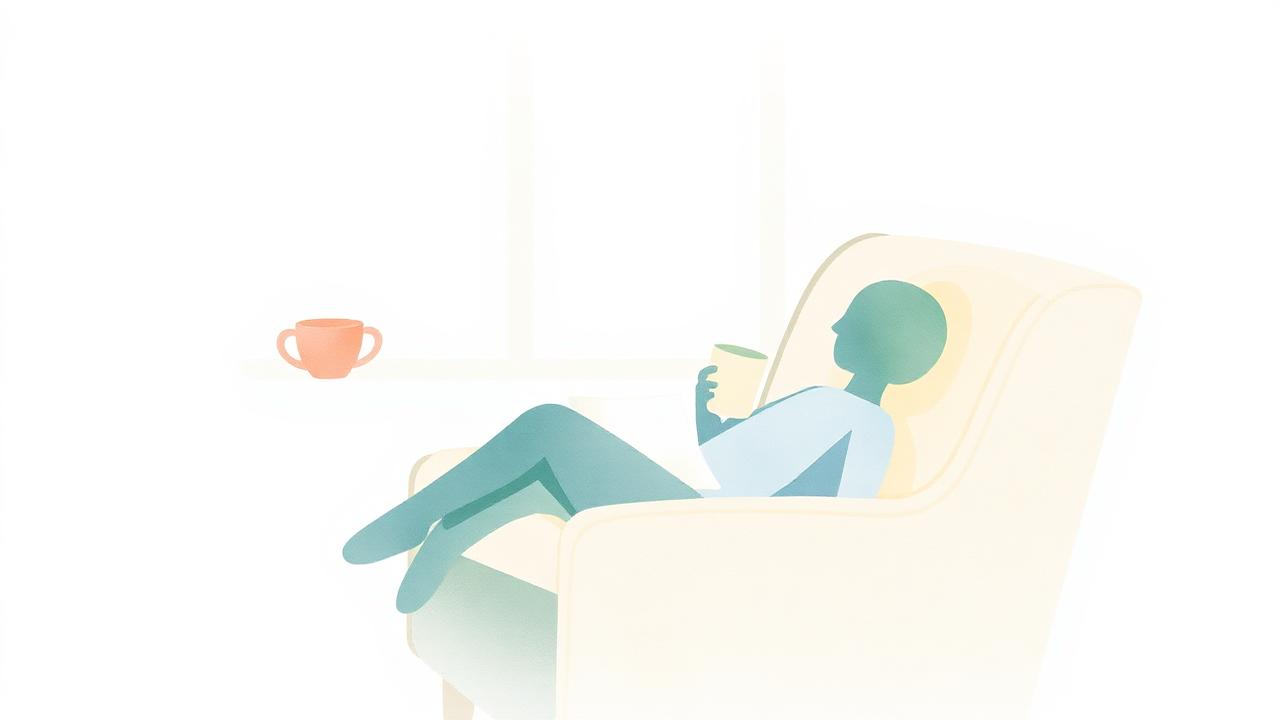
Small acts, big shifts
Living with PTSD can feel like carrying a weather system inside you — sudden storms, unexpected fog, days of unexplained heaviness. What helps most is not a single dramatic intervention but a steady rhythm of small acts that tell your nervous system, over and over: you are safe now.
Morning
- Wake up slowly. A jolt into the day mirrors the alarm state you''re trying to soothe. Give yourself five minutes before reaching for your phone.
- Feet on the floor, one long exhale. A tiny act of grounding before the day begins.
- Warmth. Warm water, warm drink, warm blanket. Warmth signals safety to the body.
Through the day
- Anchor to the senses. When intrusive thoughts arrive, name three things you see and one thing you hear. Come back to the room you''re actually in.
- Move gently. A ten-minute walk, some stretching, or shaking out the hands can discharge held activation. Movement doesn''t have to be a workout to count.
- Eat regularly. Blood sugar dips can mimic anxiety. Small, consistent meals steady the ground under you.
- Water. Dehydration amplifies dysregulation. A full glass counts as self-care.
Around people
- Choose safe company where you can. Not every relationship is a nervous-system fit right now, and that''s okay.
- Practise the "half-share". You don''t owe anyone your whole story. Share what feels safe, in the doses you choose.
- Boundaries are body work. A no said out loud is a message to your own system that you exist and matter.
Evening
- Wind down before winding down. Dim the lights an hour before bed. Screens off, or as off as possible.
- A closing ritual. A short journal, a hand on the heart, a phrase like "today is finished, I am here, I am safe."
- Keep a comfort item within reach. A soft blanket, a weighted pillow, a familiar scent by the bed.
When it''s a hard day
- Lower the bar without shame. A hard day''s success might be a shower, a glass of water, a message to one person.
- Reach for a grounding practice you''ve used before — the familiar ones work fastest.
- Remember: a bad day is not a bad recovery. It is your system asking for extra care.
The deeper truth
Coping strategies are not a life sentence of managing symptoms. They are the scaffolding around a nervous system that is, slowly and quietly, teaching itself something new: the danger is over, and I get to live now.
You are doing more than you know.
Practices that go with this article
These guided practices are part of Recovery Trauma™ membership. They were chosen to match what you have just been reading.
Ready to put what you've learned into practice?
Recovery Trauma™ gives you access to guided exercises, grounding and nervous-system practices, journals, healing journeys, assessments and other recovery resources — all in one place.
Join Recovery Trauma™Already a member? Sign in to go straight there.
Sources & further reading
- Post-traumatic stress disorder (PTSD) — overview — NHS
- Post-traumatic stress disorder — fact sheet — World Health Organization
- Post-traumatic stress disorder (guideline NG116) — NICE
- Working definition of trauma-informed practice — UK Government (OHID)
These sources are for general education. Recovery Trauma™ does not diagnose or treat — please speak to a qualified professional about your own situation.
Cite this article: Recovery Trauma™ (2026). “Living With PTSD: Daily Coping Strategies That Help.” Recovery Trauma™. https://recoverytrauma.com/blog/living-with-ptsd-daily-coping
Keep going with Recovery Trauma™
Wellbeing is not something you do alone. Here's what's next.
Keep reading
Related articles

Trauma Recovery
How to Overcome Trauma: A Step-by-Step Guide for Adults
Overcoming trauma is not about forgetting what happened. It is about helping your nervous system learn that the danger is over. Here is what that takes, step by step, at your own pace.

Trauma Recovery
What Is Emotional Trauma? When the Wound Is Not Physical
Emotional trauma comes from experiences that overwhelmed your sense of safety, worth or belonging — with no visible injury to point at. Here is what it is and how it shows up.
Trauma Recovery
What Is Trauma? A Plain Explanation of What It Is and What It Does
Trauma is not the event itself — it is what the event left behind in your nervous system. A clear, survivor-led explanation, without diagnosis or jargon.