50 Grounding Techniques for Anxiety, PTSD & Complex PTSD
Fifty grounding techniques — sensory, physical, cognitive, and relational — to bring you back to the present when anxiety, panic, or a flashback pulls you under.

50 Grounding Techniques for Anxiety, PTSD & Complex PTSD
Grounding is the art of returning to your body and the present moment. When anxiety spikes, panic surges, or a flashback pulls you under, grounding is the rope back.
There is no single "right" technique. What works in a supermarket queue is not what works at 3am. Build a toolkit, not a rulebook.
Sensory grounding (1–15)
- 5-4-3-2-1: 5 things you see, 4 you hear, 3 you touch, 2 you smell, 1 you taste.
- Hold an ice cube until it melts.
- Splash cold water on your face.
- Suck a strong mint or sour sweet.
- Smell essential oil (peppermint, citrus).
- Wrap yourself in a weighted blanket.
- Press your feet firmly into the floor.
- Rub textured fabric between your fingers.
- Listen to a single instrument in a song.
- Name every colour you can see.
- Hold something warm — a mug, a hot water bottle.
- Chew gum slowly and notice the flavour.
- Take a cold shower for 30 seconds.
- Bite into a lemon.
- Focus on the taste of a piece of dark chocolate.
Body & movement grounding (16–30)
- Push your palms hard against a wall for 30 seconds.
- Squeeze a stress ball rhythmically.
- Stand up, feel your weight, then sit down again.
- Shake out your arms and legs for one minute.
- Slow walk, naming each step: "left, right."
- Stretch your arms overhead and yawn.
- Roll your shoulders in slow circles.
- Tense and release each muscle group (progressive relaxation).
- Hold a plank for 20 seconds.
- Dance to one song, badly, on purpose.
- Sway side to side like a metronome.
- Rock gently in a chair.
- Do 10 slow squats.
- Cross your arms and tap alternate shoulders (butterfly hug).
- Massage your own hands with lotion.
Breath & vagal grounding (31–38)
- Inhale 4, exhale 8. Repeat 10 times.
- Box breathing: 4-4-4-4.
- Hum for 60 seconds.
- Sigh audibly three times.
- Gargle water loudly.
- Blow out an imaginary candle slowly.
- Sing one line of a song out loud.
- Try the Core Breathing library for guided practice.
Cognitive grounding (39–45)
- Say aloud: today's date, your age, your location.
- Count backwards from 100 in 7s.
- Name 10 animals starting with the same letter.
- Recite a poem or song lyric.
- Describe your surroundings as if narrating to a stranger.
- List your safe people, out loud, one by one.
- Do a simple maths problem on paper.
Relational & spiritual grounding (46–50)
- Text a safe person just one word: "here".
- Hold a pet, or watch one on video.
- Look at a photo of someone you love.
- Wrap your own arms around yourself and say your name.
- Place a hand on your chest and one on your belly. Breathe into both.
How to use this list
- Match the tool to the state. Frozen? Movement or cold. Overwhelmed? Sensory or breath. Dissociating? Naming and orienting.
- Practise when you're calm. Grounding techniques are muscles. Train them before you need them.
- Layer them. Cold water + naming + long exhale is more powerful than any one alone.
- Screenshot this page. Save it in a folder called When It's Bad.
When grounding isn't enough
Grounding manages symptoms — it doesn't process the underlying wound. Pair it with trauma-informed support, community, and pacing. Explore the Learn Hub, read about emotional flashbacks, or visit You Are Not Alone if you're in crisis.
You are not weak for needing tools. You are wise for building them.
Practices that go with this article
These guided practices are part of Recovery Trauma™ membership. They were chosen to match what you have just been reading.
Ready to put what you've learned into practice?
Recovery Trauma™ gives you access to guided exercises, grounding and nervous-system practices, journals, healing journeys, assessments and other recovery resources — all in one place.
Join Recovery Trauma™Already a member? Sign in to go straight there.
Sources & further reading
- Complex PTSD — NHS
- Breathing exercises for stress — NHS
- Post-traumatic stress disorder (PTSD) — overview — NHS
- National Center for PTSD — U.S. Department of Veterans Affairs
- Generalised anxiety disorder in adults — NHS
These sources are for general education. Recovery Trauma™ does not diagnose or treat — please speak to a qualified professional about your own situation.
Cite this article: Recovery Trauma™ (2026). “50 Grounding Techniques for Anxiety, PTSD & Complex PTSD.” Recovery Trauma™. https://recoverytrauma.com/blog/50-grounding-techniques-for-anxiety-ptsd-cptsd
Keep going with Recovery Trauma™
Wellbeing is not something you do alone. Here's what's next.
Keep reading
Related articles
Grounding
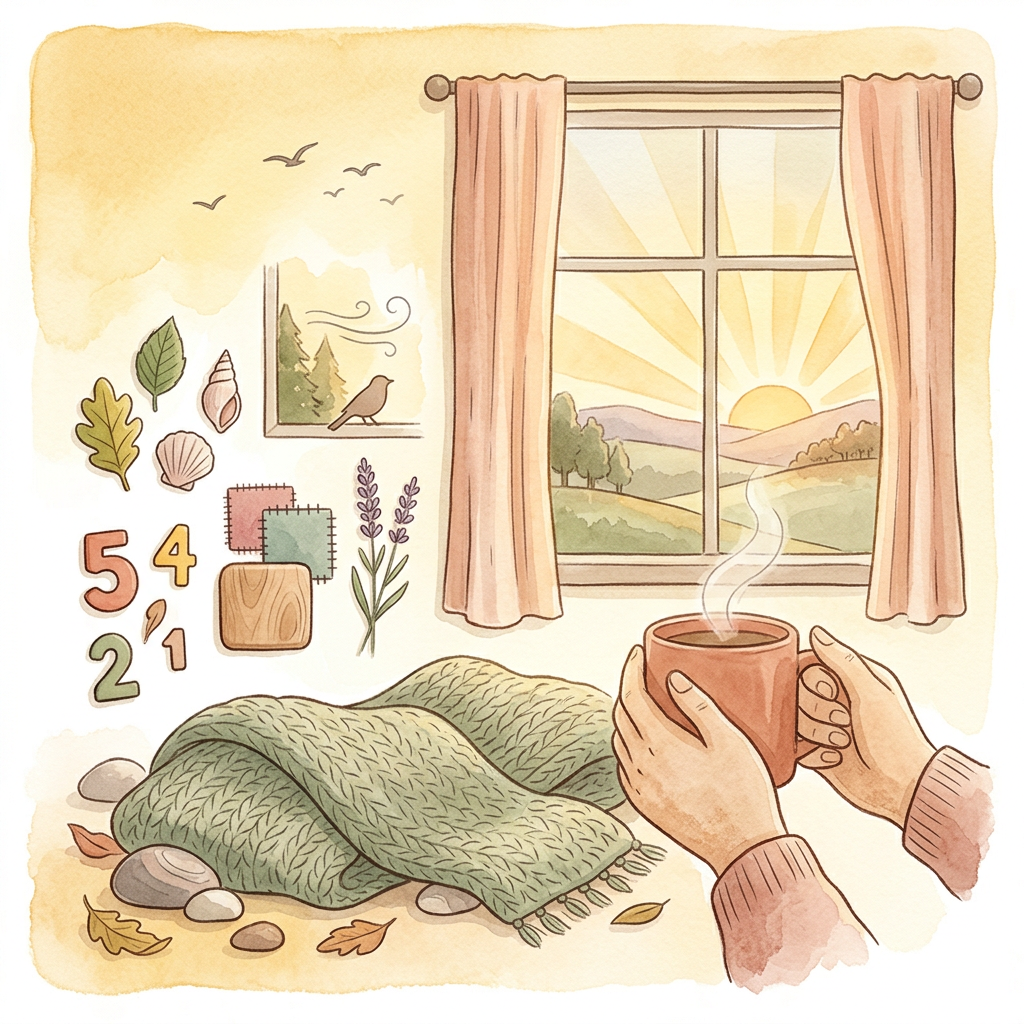
The 5-4-3-2-1 Grounding Technique: How the 54321 Method Works
Name 5 things you can see, 4 you can feel, 3 you can hear, 2 you can smell, 1 you can taste. A step-by-step guide to the 5-4-3-2-1 grounding technique, when it helps, and how to adapt it.
Grounding
Grounding 101: What to Do When the Body Activates
Simple, portable grounding practices you can use the moment the nervous system tips into fight, flight, freeze, or fawn — no equipment, no perfect timing.